Guide
Interior design client presentation: the page-by-page template
A strong interior design client presentation runs about twelve pages and roughly an hour: the brief restated, the design idea, the plan, materials, renderings, budget, then a decision page. Each page asks the client one question, and the meeting ends with a dated written record of what is approved, what needs revising and what is deferred.
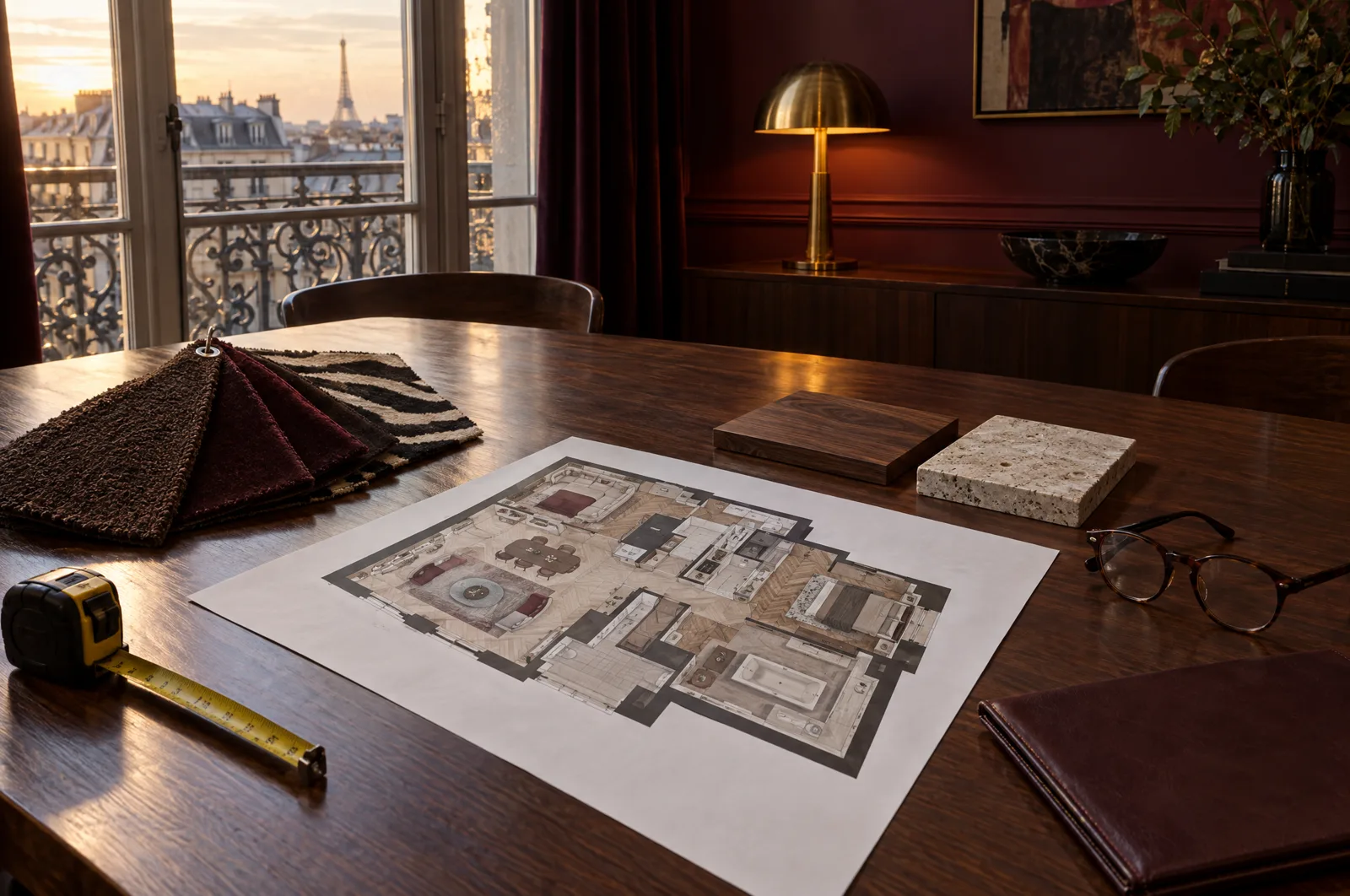
Most guides agree on the contents: plans, materials, renderings, budget, schedule. DesignFiles puts most decks at 10 to 15 slides, and Rayon lists 13 sections. What those lists leave out is the meeting itself: what gets said on each page, how long it takes, and what the client signs before leaving. This guide gives a twelve-page template with a question and a time slot per page, a priced budget page, and a decision page ready to copy.
Match the deck to the stage of the project
A concept meeting and a final design meeting ask for different things. The stage names vary from one studio to the next, and so does the contract, but the decision to obtain is what should shape the deck.
| Stage | What the client sees | Decision to obtain |
|---|---|---|
| Concept | Brief, mood board, first layout sketches | The direction and the general layout |
| Design development | Scaled plans, elevations, materials, renderings, budget estimate | The plan and the budget range |
| Final design | Full selections, firm pricing, schedule | The selections and the go-ahead to order |
The template below fits a design development meeting, the fullest of the three. For a furnishing-only project with no construction, drop the elevations and keep the rest.
The template: twelve pages, one question per page
The timing is our own suggestion. None of the guides we read gives one, so adjust it to the client and the size of the job. Its main job is to stop a familiar failure: twenty minutes on the mood board, then the budget rushed through with coats already on.
| Page | Content | Question for the client | Time |
|---|---|---|---|
| 1 | Cover: project, client, date, version number | None | 0 min |
| 2 | The brief restated: how they live, constraints, stated budget | Is this still right? | 5 min |
| 3 | The design idea in three sentences | Does this answer the brief? | 5 min |
| 4 | Mood board | Is this the feeling you asked for? | 5 min |
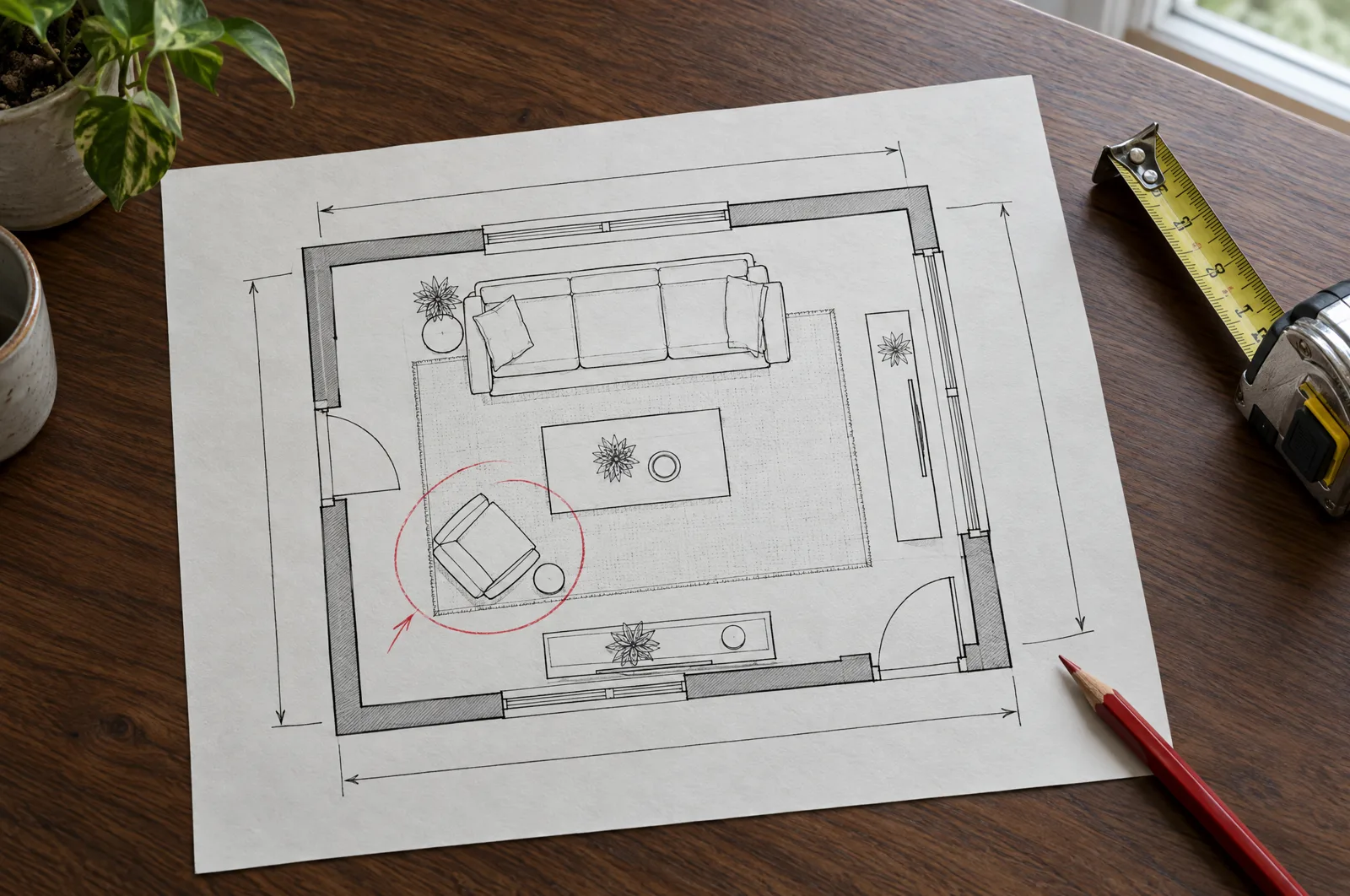
| 5 | Existing plan and proposed plan | Does this layout work for daily life? | 10 min |
| 6 | Elevations of the walls that change | Do these heights and storage work? | 5 min |
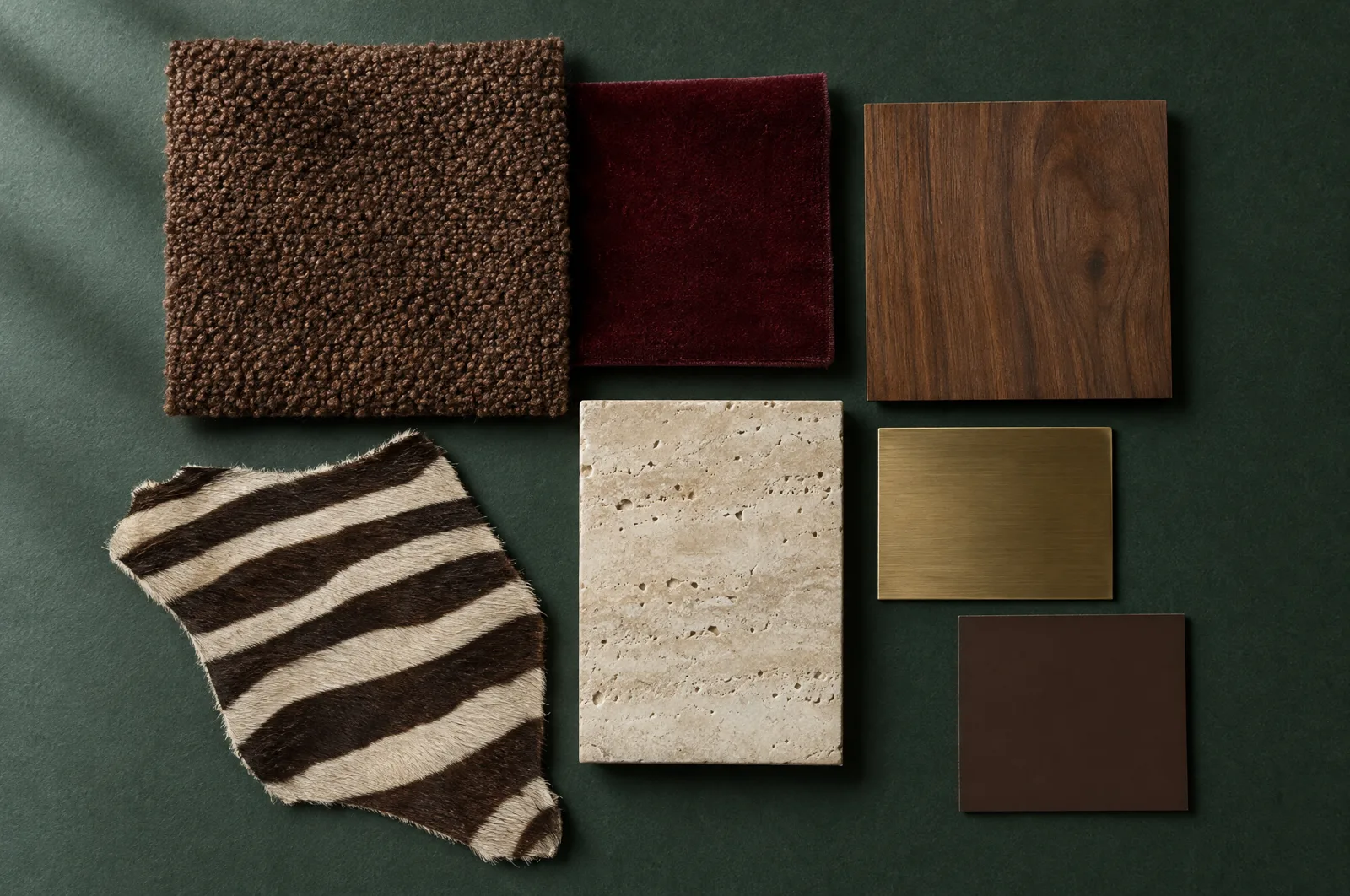
| 7 | Materials and color, samples in hand | Is there anything you would rule out? | 5 min |
| 8 | Lighting plan | Are your evenings covered? | 5 min |
| 9 | 3D views or renderings | What would you change in this image? | 5 min |
| 10 | Furniture selections | Which pieces are staying in? | 5 min |
| 11 | Budget by category | If the total runs over, what gives? | 10 min |
| 12 | Schedule and decision page | What are we approving today? | 5 min |
That adds up to 65 minutes. Book an hour and a quarter to leave room for questions.
The question column is the point of the template. A client can love a page and still have no idea what is expected of them. Ask the question out loud and write the answer on the page, and the meeting notes are half done.
Why the renderings come after the plan
Cedreo suggests a similar order: story, mood boards, materials, plan, then 3D renderings as the high point, followed by furniture and budget. The reasoning holds up. Show a beautiful image first and the conversation drifts to a throw pillow while the position of the kitchen island is still unsettled. Once the client understands the plan, the same image confirms what they just heard.
The budget appears twice. Page 2 restates the figure early, which is what Houzz Pro recommends, so the client knows every idea was designed inside it. Page 11 breaks it down once everything is on the table.
How many options to show
Designers disagree. DesignFiles advises limiting alternatives, leading with the strongest recommendation and keeping backups in reserve. Boston designer Dane Austin, on the Business of Home podcast in April 2025, offers three picks for each furnishing or fabric: one safe, one more luxurious, one playful.
Both work once you separate the levels. On the overall direction and the plan, make one recommendation and stand behind it. On furniture and fabric, prepare two or three choices, because that is where a client can take ownership without reopening the structure of the project. An alternative earns its slide when it reflects a real trade-off, such as keeping an existing sofa or paying more for one that fits.
The budget page, with real numbers
A single total invites a negotiation about the total. DesignFiles suggests breaking costs into categories and marking what is estimated, fixed or an allowance. Those three labels are enough. Estimated is a ballpark. Fixed is a quote in hand or a price read on a specific item. An allowance is money set aside for a decision still open.
Here is the format, using furniture for a living room. The figures are the first and third quartiles of US listings from our price pages (sofa, armchair, coffee table, rug), read on Google Shopping on October 8, 2026. They are indicative and describe retail listings, so a custom or trade selection will price differently.
| Item | Status | Range |
|---|---|---|
| 3-seat sofa | Estimated | $397 to $1,240 |
| Armchair | Estimated | $199 to $499 |
| Coffee table | Estimated | $168 to $699 |
| 5 x 8 ft rug | Estimated | $127 to $524 |
| Furniture total | $891 to $2,962 |
As the project moves on, lines change from estimated to fixed. The client watches the budget firm up, and any gap gets discussed line by line. Our shopping list page gives the same benchmarks for more furniture. Keep design fees on their own line, stated the way the contract states them.
The decision page: a template
Cedreo recommends a section where the client confirms approval in writing without showing what it contains. This is one version, filled in during the meeting.
- Project, stage, version: Living room, design development, version 2, November 2.
- Approved as shown: proposed plan, mood board, flooring.
- To revise: bookcase height, north wall color.
- Deferred: rug choice, once samples arrive.
- Budget going forward: the amount and date of the budget page.
- Next step: date of the revised version and of the next meeting.
- Agreement: name, date, signature.
The example content is made up. The "deferred" line solves a common problem: a hesitation forced into a yes tends to come back during installation.
One legal note on where you sign. The FTC's Cooling-Off Rule lets buyers cancel a door-to-door sale until midnight of the third business day, and a contract signed at the client's home can fall into that category. The rule has exemptions. Whether it reaches your contract is a question for your lawyer, along with any state rules.
After the meeting
Send the notes within 48 hours, a window we suggest while memory is still accurate. One page is enough: the completed decision page and the changes you promised. Houzz Pro advises saying when the revised plan will arrive and making sign-off easy, with an e-signature if needed. Send the PDF with its version number so nobody works from an old file.
Where an AI image fits
An image generated over a photo of the room works well at concept stage: it shows a mood in the actual space before anyone builds a 3D model. Tell the client its limit. It is no scaled plan, and the furniture drawn in it may not exist. A small line on the page, "concept image, not contractual", prevents the misunderstanding.
The Spaace It app does this from a photo: a rendering of the room in a chosen style with adjustable light and materials, then similar products at indicative prices for the furniture in the image. Our guide to decorating a room with AI walks through it, and the subscription is $19.99 a month or $39.99 a year. Listing photos follow different rules, which our virtual staging cost guide covers.
Frequently asked questions
How many slides should an interior design presentation have?
DesignFiles says most run 10 to 15 slides. The template in this guide uses twelve pages for a design development meeting, and fewer for a single small room or a furnishing-only job.
What should a client presentation include?
The brief, the design idea, a mood board, plans, elevations, materials, lighting, renderings, furniture selections, a budget by category, a schedule and a decision page the client can sign.
Should the deck go to the client before the meeting?
We suggest sending it afterward, because a client reading alone judges the images first and misses the reasoning behind the plan. The guides we read do not settle this, so a client who wants to prepare can get the restated brief in advance.
How many design options should you show a client?
One recommendation for the overall direction and plan is clearer. For furniture and fabrics, two or three prepared picks let the client take part without reopening the structure of the project.
Sources
- Hemea, mission d'un architecte d'intérieur
- DesignFiles, How to Create an Interior Design Presentation
- DesignFiles, 21 Tips on Client Presentations
- Rayon, How to make a great interior design presentation
- Cedreo, How to Create a Professional Interior Design Presentation
- Houzz Pro, interior design presentation ideas and tips
- Business of Home, How do I take my presentations to the next level (16/04/2025)
- Nodal Reno, gestion de projet d'un architecte d'intérieur
- DGCCRF, délais de réflexion ou de rétractation
- 16 CFR 429.1, Cooling-Off Rule (Cornell LII)
- EUR-Lex, Directiva 2011/83/UE, artículo 9 (ES)
- EUR-Lex, Direttiva 2011/83/UE, articolo 9 (IT)
Want to see it in your home?
With Spaace It, take a photo of your room, pick a style, and see the result before you change a thing.