
Guide
Can ChatGPT design a room? What it does, and where it stops
Yes, ChatGPT can design a room, and so can Gemini: upload a photo, describe the style, get a new image. The trouble starts after that. The image often drifts from your real room, with an extra window or curtains you never asked for, and the furniture in it is drawn: none of it is a product you can buy.
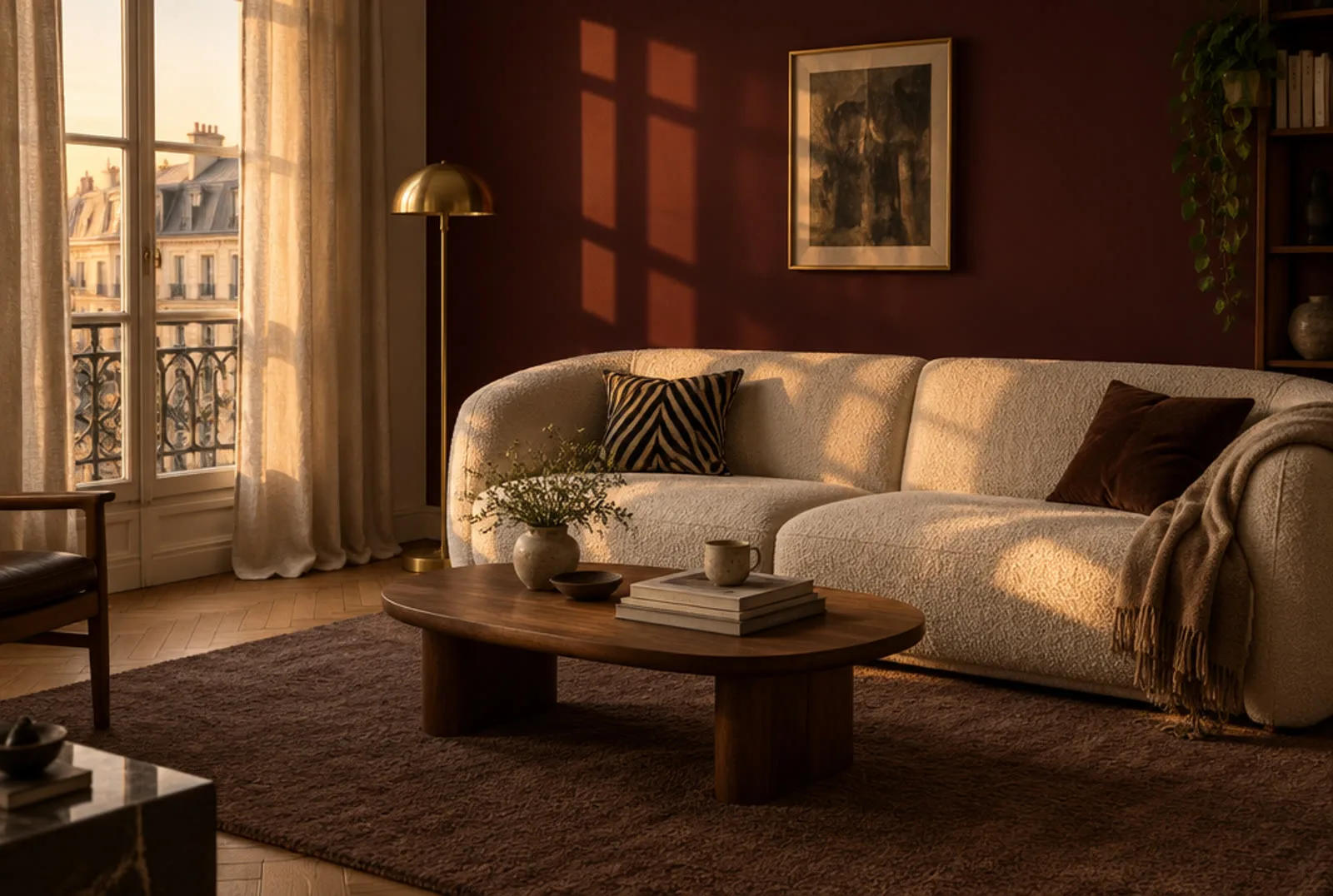
What ChatGPT and Gemini are good at
Both assistants take a photo of your room and hand back a new image in the style you ask for. Tom's Guide walked through it with ChatGPT in a piece dated September 4, 2025: start with a clear photo, free of people and clutter, then write a prompt that names the style and asks to keep the layout.
Gemini works the same way. A Livingetc writer attended a workshop at Google's offices and published what he learned on April 1, 2026. You can attach reference images, a photo of a real dining table for instance, and describe each product so it shows up in the room.
Before the image come the ideas. Give your taste, the room's dimensions and what stays, and you get a palette and a possible layout.
One more thing people miss: ChatGPT can also look for products. When a question shows shopping intent, it displays product cards with an image, a price and a link to the merchant, according to OpenAI's help page, read on October 9, 2026.
Where it falls short
The new room drifts from yours
The Tom's Guide author says it plainly: ChatGPT may add a window or a door that isn't in the room. Hannah Berry, who writes about her own home, documented a real project on June 1, 2025. She changed one item at a time and told ChatGPT to leave everything else alone. Her verdict: it sometimes worked and sometimes didn't. The final rendering took her a few hours.
The furniture in the image is drawn
The sofa in the picture was invented for the picture. You may love its shape, but no store sells it. To start from a real piece you have to supply its photo as a reference, and Livingetc notes that this is not foolproof. The writer never got a loft bed with a desk underneath to come out right.
Prices need a second look
OpenAI states that the prices shown in ChatGPT come from third-party providers and that a merchant's update can take a while to appear. The price in the first answer is the first listed merchant's, which may not be the lowest. Open the listing before you pay.
Image counts are capped
On Google's side, limits depend on your plan, generating media uses more of your allowance than text, and Google's official help page on Gemini usage limits, listed in the sources, warns that they may change without notice. Figures quoted elsewhere contradict each other from one month to the next. Trust the number your own account shows.
The same exercise on an empty room
To show what a careful prompt gets you, we ran the exercise on October 9, 2026 with gpt_image_2_5, an image generation model, called outside ChatGPT. So this is a look at one model and says nothing about the ChatGPT or Gemini apps themselves. The starting room is a generated image too: we don't publish someone's apartment.
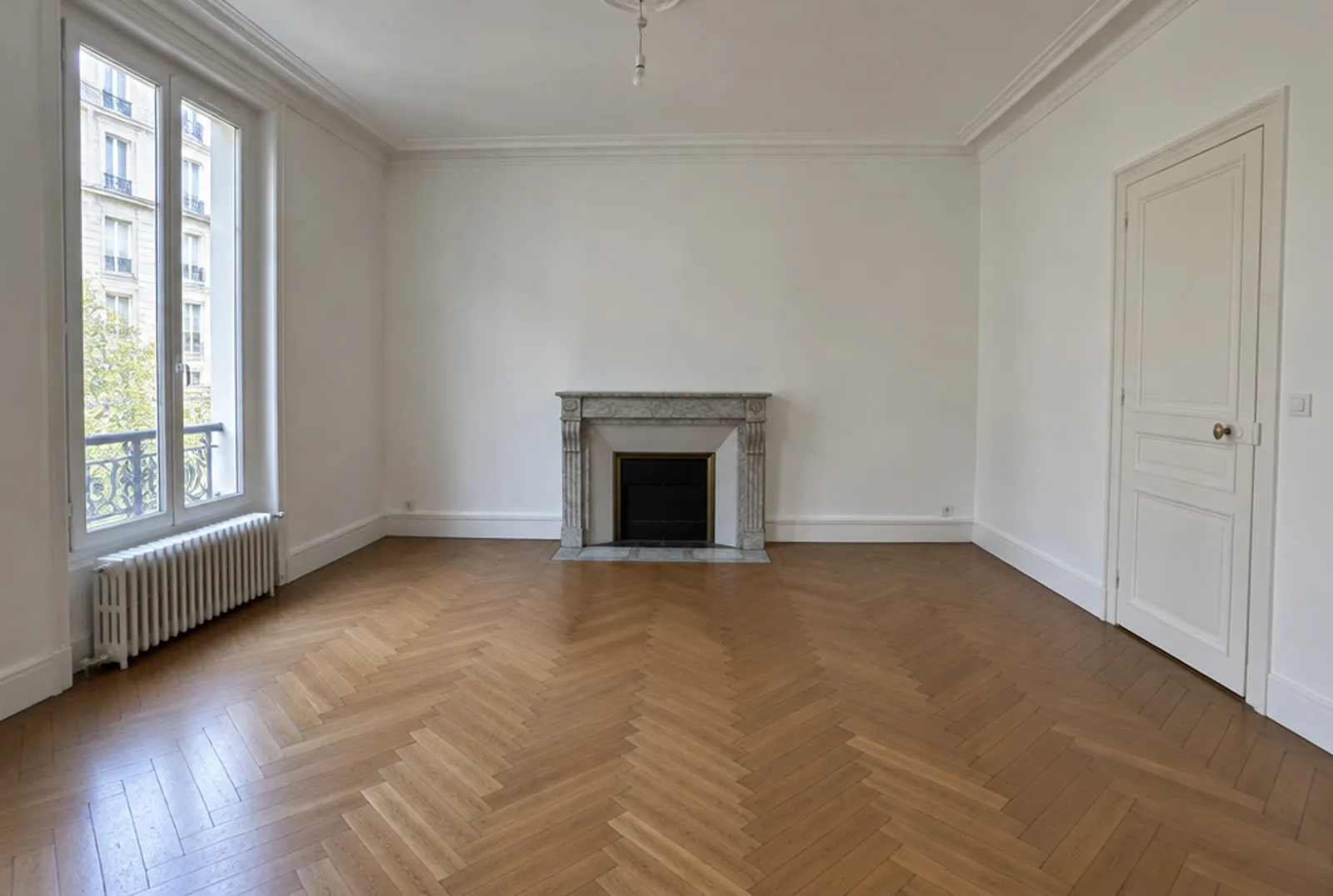
The prompt asked to keep the walls, window, radiator, door, fireplace, floor and camera angle, then add six things: a cream boucle sofa, a walnut coffee table, a cocoa-brown rug, a burgundy velvet armchair, a brass floor lamp and a framed artwork above the fireplace.
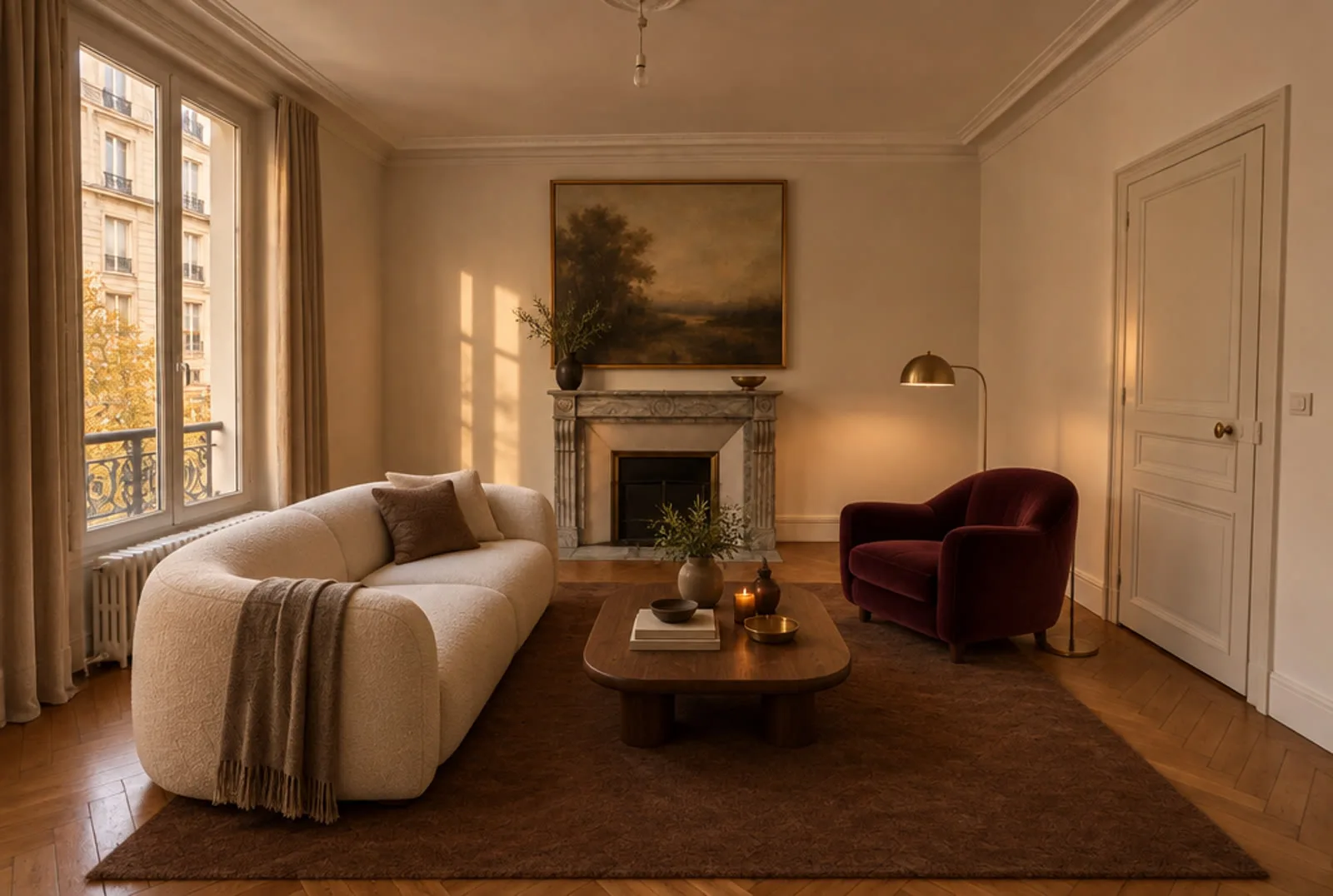
The result holds up: window, radiator, fireplace and door are where they were. Now look closer. Curtains appeared although the prompt never mentioned them. The floor got darker. The tree outside moved on to fall. And none of the six pieces is something you can buy. One run proves little, but it shows you where to look.
Side by side: who does what
| What you want | ChatGPT | Gemini | Spaace It |
|---|---|---|---|
| A picture of your room, restyled | Yes, from a photo | Yes, from a photo | Yes, from a photo |
| What you provide | A photo and a written prompt | A photo, a prompt, reference images (three per prompt on the free tier, per Livingetc) | A photo and a style picked from a list |
| How faithful it stays | May add a window or door (Tom's Guide) | Inserting a real product is "not foolproof" (Livingetc) | Check it too: it is still an AI image |
| Furniture you can buy | Product cards with price and link, in a separate search | Nothing documented in the sources we read | A dot on each detected piece, eight at most, opening look-alike offers |
| How reliable prices are | From third parties, sometimes delayed (OpenAI) | Not covered | Labelled as indicative when the price was not re-read on the merchant's page |
Table sources: the articles and help pages linked above, read on October 9, 2026; for Spaace It, the app's code on the same date.
A method that works in ChatGPT or Gemini
- Shoot the room in daylight, at eye level, with no people and no clutter.
- Name the style and the materials precisely: "walnut", "boucle", "brushed brass". Not sure about your style? The style quiz gives you one in a few questions.
- Spell out what must stay: walls, windows, doors, floor, camera angle.
- Ask for one change per message. That is Hannah Berry's method, quoted above.
- Compare every image with your photo. Count the windows and the doors.
- Measure before you buy. A picture has no idea how wide your wall is.
A prompt you can copy:
Here is a photo of my living room. Keep the walls, windows, doors, floor and camera angle exactly as they are. Replace only the sofa with a three-seat sofa in cream boucle fabric. Change nothing else.
Then stay in the same conversation and move one item at a time: the rug, then the coffee table.
From the picture to the shopping list
This is the step general assistants leave to you. In ChatGPT you can run a product search for each piece, then confirm the price on the merchant's page.
Spaace It handles that step. After a redesign, a button drops a dot on the furniture detected in the image, eight pieces at most. Tap a dot and you see offers: product image, merchant, price, link to the product page. The furniture comes from an AI image, so the offers are look-alikes. A heart saves an offer to your shopping list, with the item count and the total.
If you start from one specific piece you saw in a photo, find furniture from a photo explains how it works: you need the photo of the piece and a photo of your room. To see how a restyle turns into a list with prices, read AI interior design with a shopping list, and check typical furniture prices before you set a budget.
The app is free to download. The subscription costs $19.99 a month or $39.99 a year; details are on the pricing page.
Which one to pick
You want ideas or a second opinion on your layout: ChatGPT or Gemini will do, and one of them is probably on your phone already.
You want to see your room in a given style and you enjoy writing prompts: both can get there, as long as you move one change at a time and check every image against your photo.
You want to end up with a shopping list and prices: plan a product search for each piece in ChatGPT, or use a tool made for that job. You can see what one looks like on the Spaace It home page.
Frequently asked questions
Can ChatGPT design a room from a photo?
Yes. Upload a clear photo of the room, name the style and ask it to keep the layout: ChatGPT returns a new image. It may add a window or a door that isn't there, as Tom's Guide points out, so always compare the result with your photo.
Is Gemini better than ChatGPT for interior design?
None of the sources read for this guide compares them on the same room, so we won't call it. Both start from a photo and a prompt. Gemini accepts reference images of real products, with results Livingetc describes as not foolproof.
Can you buy the furniture shown in the image?
Not as shown: the model drew it. You can look for similar pieces one by one with ChatGPT's product search, or with an app that finds look-alike offers from the image, such as Spaace It.
How many room images can you generate?
It depends on your plan and it changes often. Google says Gemini limits may change without notice and that generating media uses more of your allowance than text. The reliable figure is the one your account shows.
Sources
- Tom's Guide, How to use ChatGPT to redesign any room (Amanda Caswell, 4 septembre 2025)
- Hannah Berry, Create professional-looking interior design renderings with AI (1er juin 2025)
- Livingetc, I Went to Google HQ to Learn How to Properly Use AI to Visualize My Home Renovations (Hugh Metcalf, 1er avril 2026)
- Planner 5D, Comment utiliser ChatGPT pour les projets de design d'intérieur (mis à jour le 10 septembre 2025)
- OpenAI Help Center, Shopping with ChatGPT Search (consulté le 9 octobre 2026)
- Aide Google, Gemini Apps limits & upgrades for Google AI subscribers (consulté le 9 octobre 2026)
Want to see it in your home?
With Spaace It, take a photo of your room, pick a style, and see the result before you change a thing.