DIY · été
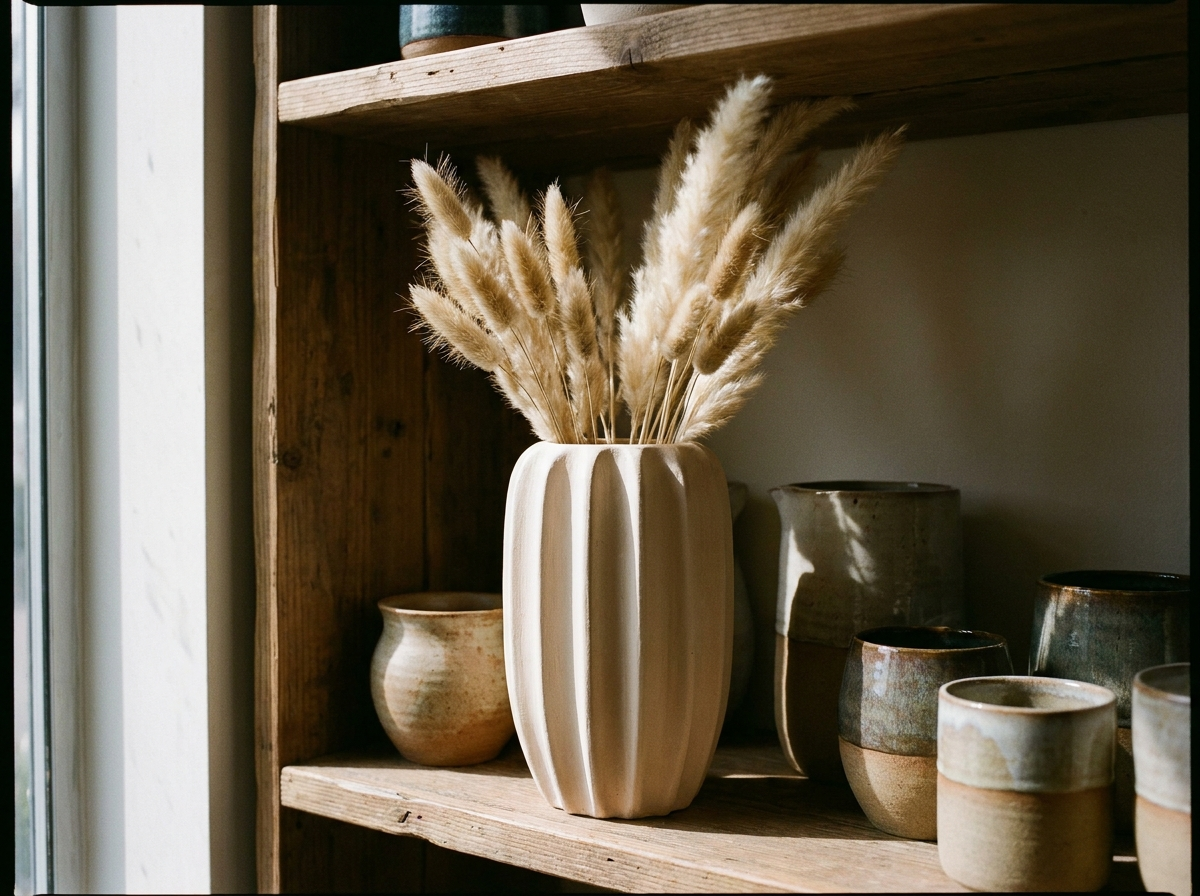
The fluted plaster vase, high-end decor look
 Reference tutorialBoheme and CoSee the tutorial →
Fluted plaster-effect vases cost a fortune in decor shops. This one is made with a reused container and straws, for a few euros, and no one will guess. On each diagram below, the highlighted zone shows the current step.
What you need
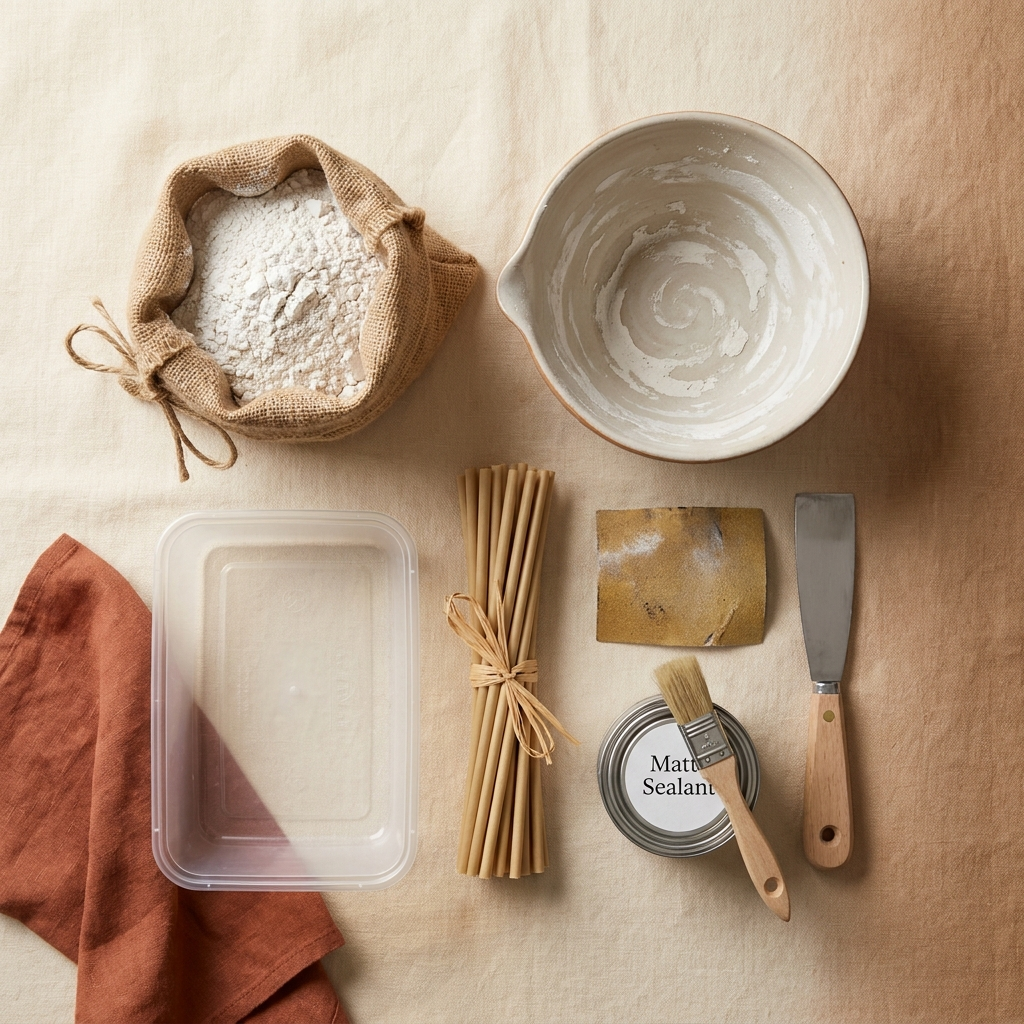
- Plaster powder (~€5)
- A plastic container for the mould (tub, box)
- A pack of straws (for the fluting)
- A small glass/tube for the inner opening
- Fine sandpaper + matte sealant (optional)
- Bowl + spatula to mix
Step by step
Prepare the fluted mould
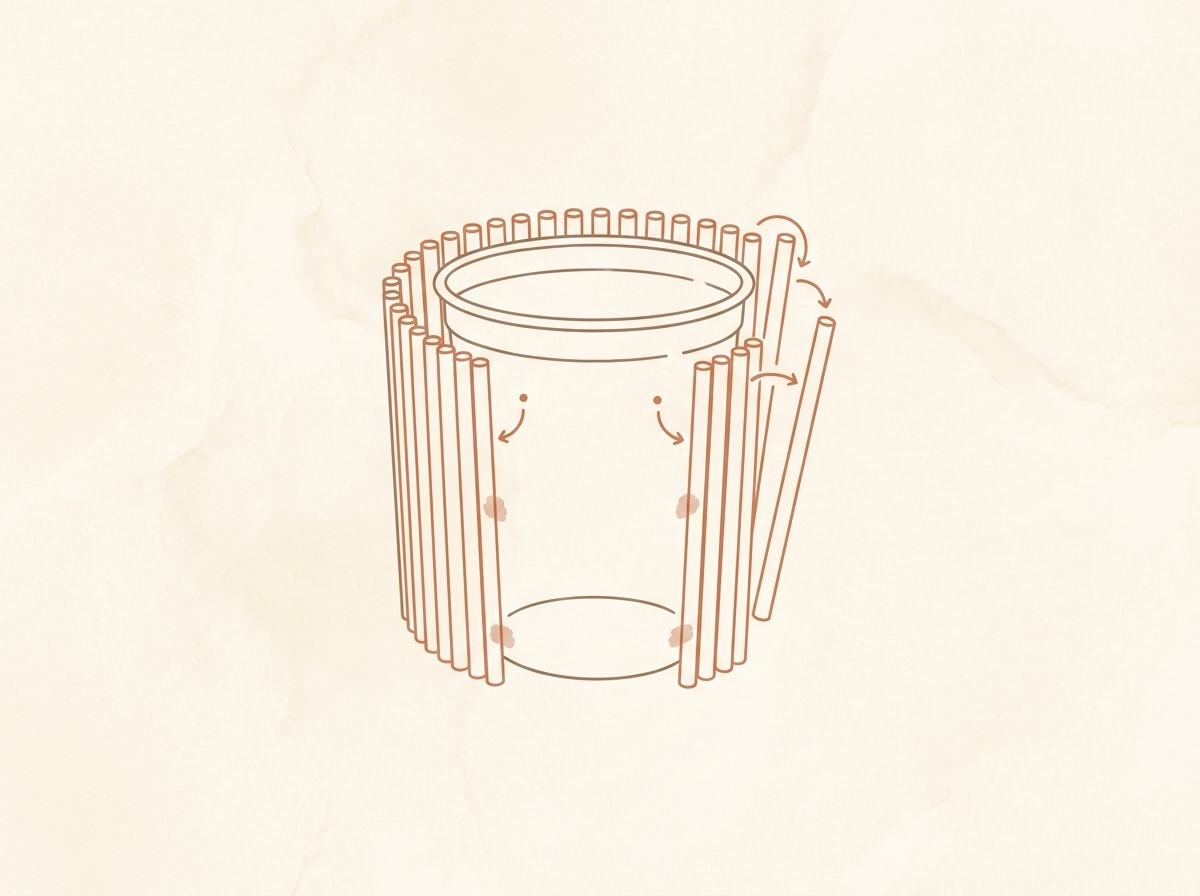
Line the inside of your plastic container with straws standing tight all around: they create the fluting. Place a small glass in the centre to reserve the water space.
Pour the plaster
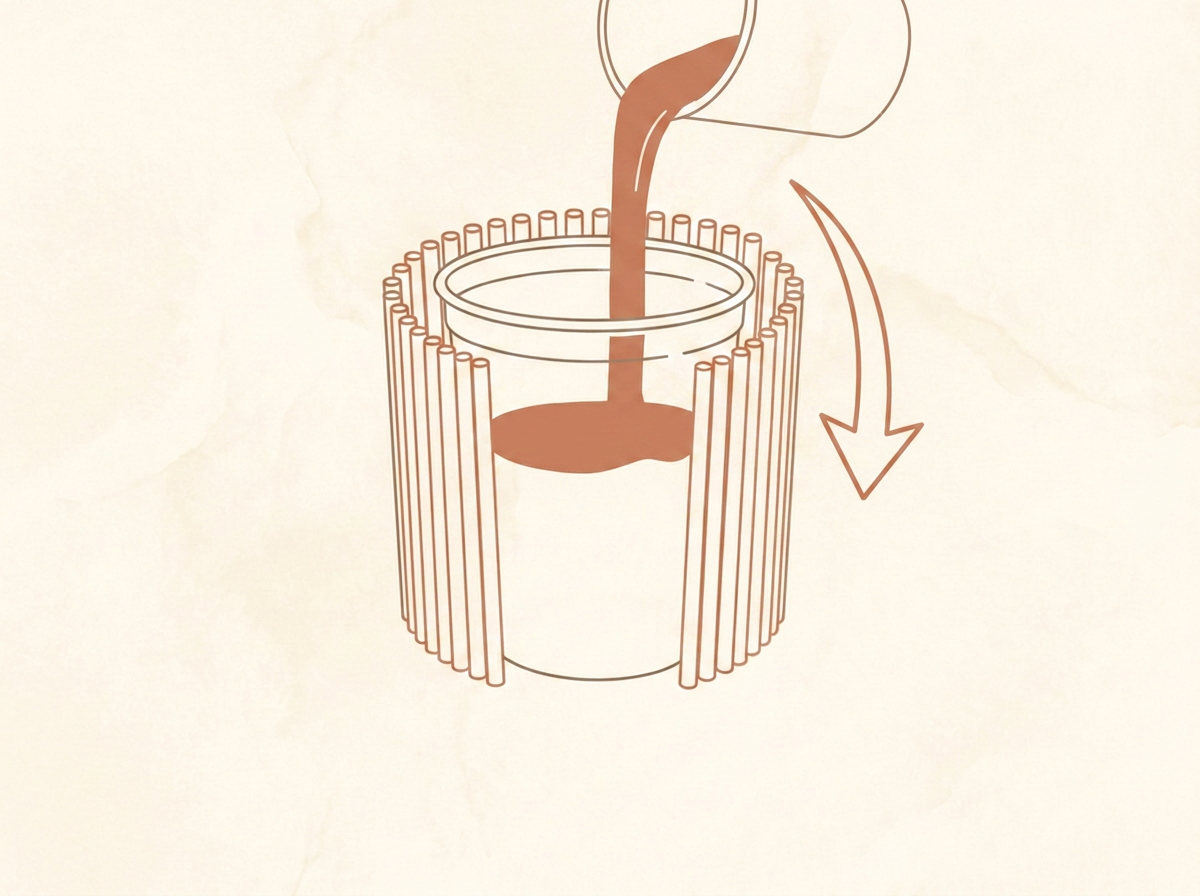
Mix plaster with water to a thick pancake-batter consistency, then pour it between the straws and the central glass. Tap the container to release bubbles. Let it set completely (several hours).
Unmould
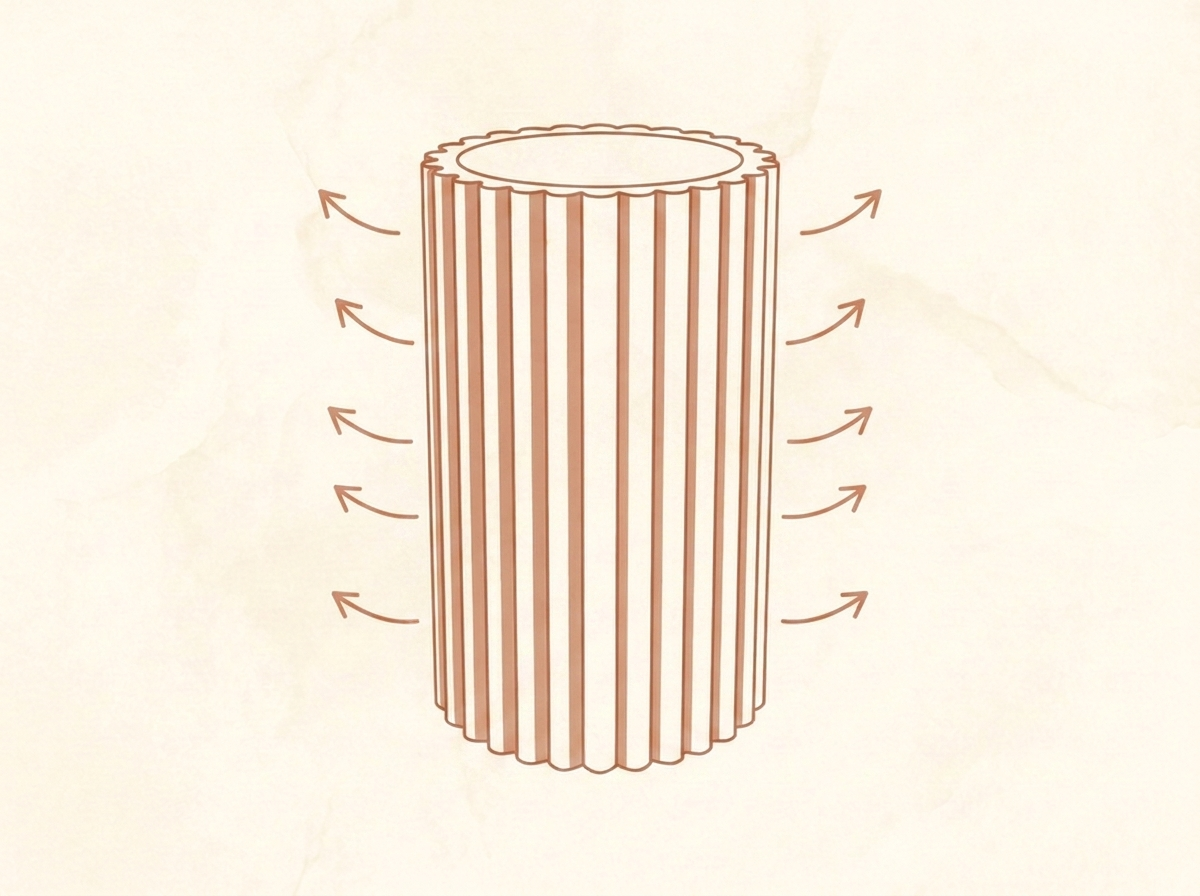
Once fully dry, remove the container and the central glass, then gently peel the straws one by one: the fluting appears. The satisfying moment. Handle with care, fresh plaster is still fragile.
Sand and fill
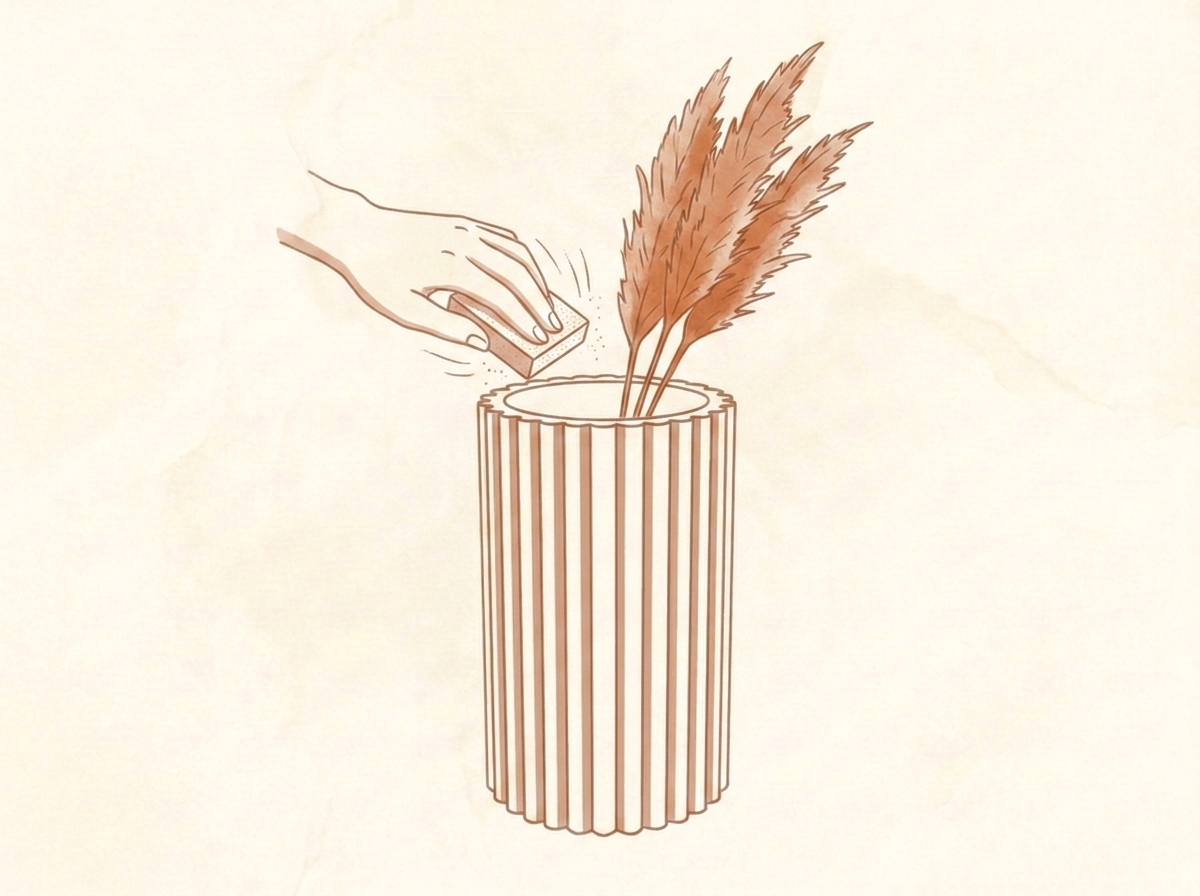
Lightly sand the edges with fine grit to soften. For use with water, apply a matte sealant inside. Otherwise, fill with dried flowers (pampas, eucalyptus): the fluted-stone effect is stunning.
The detail that changes everything
The secret to nice fluting is tightly packed straws and plaster neither too runny nor too thick. And above all: a matte finish, never glossy, for the stone effect.
Where does it look best?
On a shelf, a coffee table or a console, solo or in a trio of different heights. Raw plaster pairs with wood, linen and natural tones. Keep it away from water if unsealed.
Step-by-step inspired by a tutorial spotted on YouTube. Plaster warms as it sets, that's normal.
Try it right at home
Snap a photo of your space and preview the result in seconds. Plus find all our decor tutorials on the app, and much more.